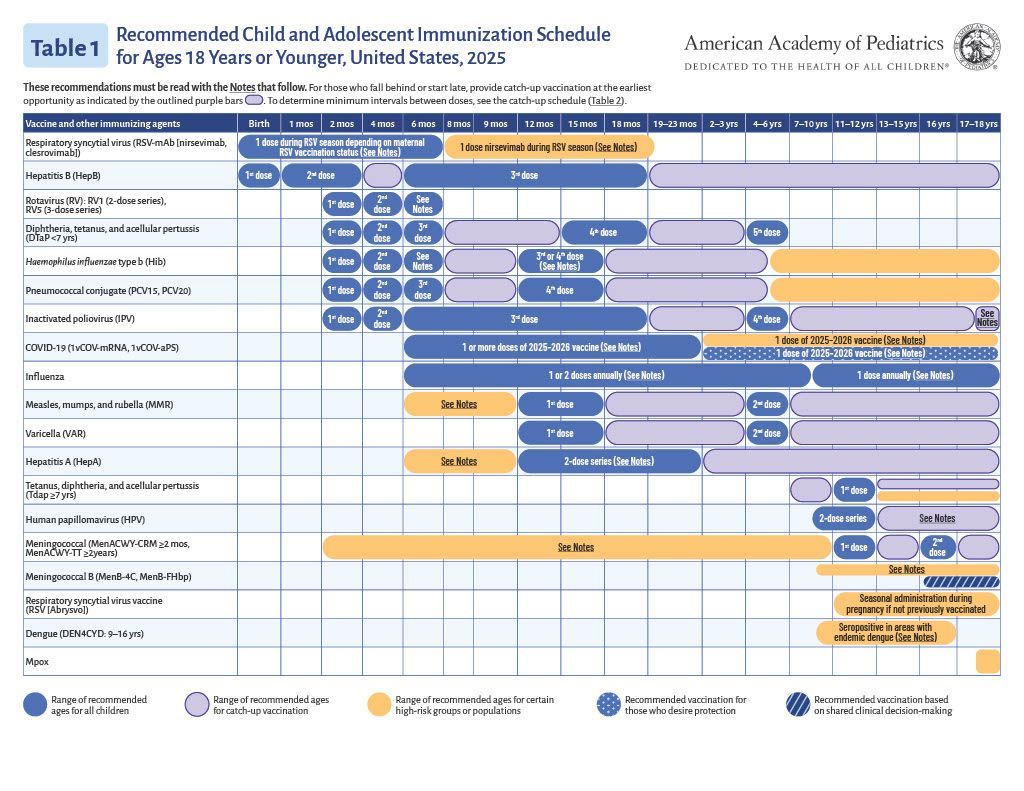
American Academy of Pediatrics Vaccine Schedule
Key Facts
- How often and how many vaccines children in the U.S. receive at certain ages is based on the times when vaccines will work best with children’s immune systems and when they are most vulnerable to certain diseases. Sometimes this means children will receive multiple shots in a short period of time. There is no medical reason to delay or skip recommended immunizations.
- Vaccine recommendations are largely based on a population’s risk of exposure to a disease and how that disease impacts health. For example, the United States does not recommend routine immunization for tuberculosis, typhoid, yellow fever, malaria, meningococcal disease (for infants), or dengue, while these are routinely recommended in other countries.
- The cost-effectiveness of implementing a national program for a particular vaccine—how the costs of buying and administering the vaccine compare to the costs of medical visits, hospitalizations and missed work caused by the disease—is another factor that varies by country.
- Certain vaccines are not available in every country, which can lead to nuances in vaccine schedules, especially for combination vaccines.
- Some countries may also consider how to best incorporate immunizations into routine health visits. Where and when these routine visits occur may differ by country and therefore impact the immunization schedule. While routine vaccination often occurs in pediatric offices in the United States, many countries offer vaccines through public health programs.
- Trials that compare vaccines already proven to be safe and beneficial for children to placebos (such as saline-filled shots) would not be authorized by clinical trial oversight boards in the United States due to modern ethical standards for patient safety. These standards ensure researchers do not purposely withhold beneficial treatments or preventive therapies from trial participants. No child in a vaccine trial goes unprotected without a very clear scientific and ethical reason. That’s why comparison groups in some trials may use an existing vaccine instead of saline. It’s still rigorous science—and it keeps kids safer.
American Academy of Pediatrics Vaccine Schedule
vb